
Saas Write for Us
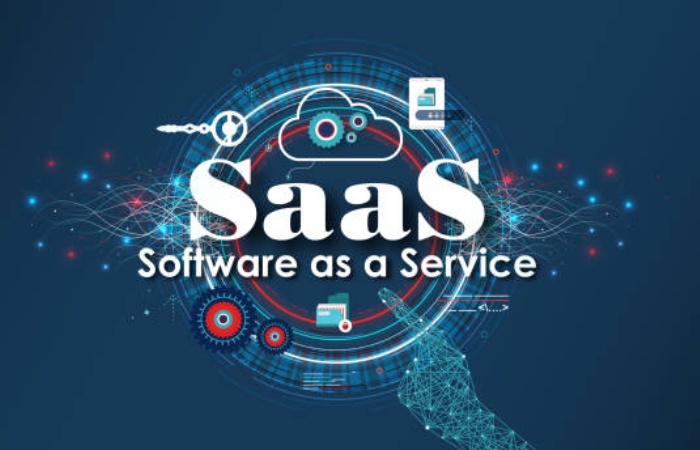
Software as a service (SaaS) is a cloud-based delivery model in which vendors host applications on remote servers and make them obtainable to users over the Internet, naturally via a web browser. Users subscribe to the software slightly than purchasing it, enabling lower upfront costs, automatic updates, and scalability.
What is Software as a Service (SaaS)?
Software system as a Service is a software distribution model in which customers pay for access to a cloud-based software program over the Internet, rather than purchasing it directly. This is different from traditional software that you need to obtain and install yourself. Instead, delivers access to apps through monthly or annual subscriptions, with common structures such as multi-user accounts and pricing plans.
Examples of general SaaS platforms include Salesforce and Slack, which offer tools like CRM, messaging, and collaboration on a simple pay-per-use model.
SaaS allows users to easily access powerful applications from any Internet-enabled expedient and pay for the equal of service they need.
How SaaS works
SaaS leverages cloud computing infrastructure and economies of scale, offering customers a more flexible approach to implementing, using, and paying for software. All applications have the following characteristics:
SaaS applications are designed to be hosted in the cloud. SaaS software providers can host applications on their own cloud structure or with a cloud service provider. Placing with a consolidated provider can help enterprises achieve greater global scalability and availability.
SaaS applications are available to any customer with an internet connection and a connected device. They usually work in any web browser and on any computer or mobile device, but are typically more effective on mobile phones and tablets. In some cases, SaaS applications may offer or require a dedicated lightweight client—a lightweight computing device that runs on a central server and uses its resources.
SaaS applications use a multi-tenant architecture, where a single example of a software application (and its original database and hardware) serves multiple tenants (or user accounts). To safeguard data security and privacy, the application data, user data, system data, and user settings for each customer are separated from those of other customers.
Benefits of SaaS
The advantages and benefits of are best understood in contrast to traditional software (software installed and managed on on-premise infrastructure):
SaaS provides faster, even instantaneous, implementation and benefits. Customers can purchase and start using requests immediately, sometimes within minutes, with minimal upfront costs (usually this is the cost of the first month’s subscription). In comparison, traditional software may require purchasing and allocating servers, installing software on each user’s device, and budgeting and purchasing a full license for each user.
SaaS provides access to new features and releases as they become available. SaaS vendors update and add features in real-time, multiple times a week, often without customers’ knowledge. They can even update the interface and user experience without disrupting customer operations. In the case of traditional on-premise software, frequent updates are so expensive and inconvenient that customers can wait months for a feature to appear in a new release (unless they decide to forgo some updates altogether).
SaaS provides cost-effective scalability with low demand. Customers can scale applications according to their needs by simply upgrading or downgrading the tariff level or purchasing additional capacity. Traditional software requires users to purchase additional capacity in anticipation of peak loads, which often remain idle until needed.
SaaS offers predictable costs and a significant reduction in overhead. With SaaS, you don’t have to budget for infrastructure to run the software, updates (and the infrastructure needed to support them), or full-time IT professionals to install, update, and maintain the software. Most of the cost goes directly to the use of the software.
How to Submit Your Articles?
When you have composed your blog, please submit it to contact@computeritblog.com
After submission, our team will analyse your material to remove unnecessary snippets and check its uniqueness before publishing.
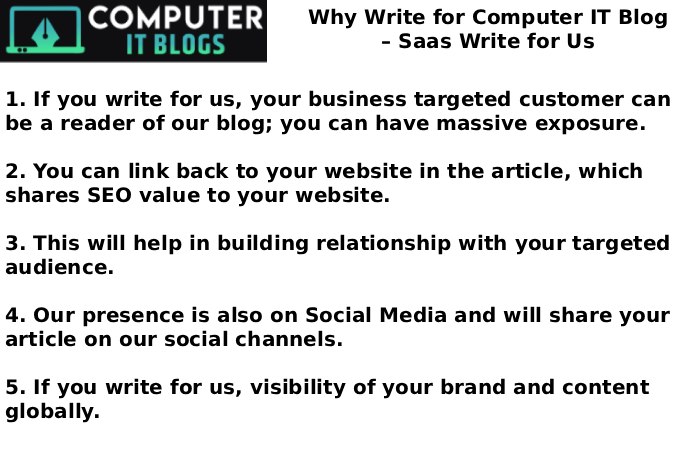
Why Write for Computer IT Blog – Saas Write for Us.
Saas Related Search Terms
Saas write for us free
Saas write for us
Write for us software
Write for us B2B
Write for us CRM
Write for us fintech
Write for us marketing
Write for us ai saas startup tools
Search Terms for Saas Write for Us
write for us computer
write for us + computer
write for us cybersecurity
computer write for us
write for us cloud computing
write for us laptop
technology “write for us”
cybersecurity write for us
write for us + laptop
cyber security write for us
write for us + cybersecurity
cloud computing “write for us”
write for us + technology
uploadarticle write for us
write for us
write for us technology
guest post + technology
write for us + education
write for us business
write for us + general
write for us + tech
technology write for us
write for us general
write for us+technology
write for us tech
write for us saas
write for us technology usa
write for us education
technology + “write for us” + guest post
write for us +technology
guest post technology
technology write for us guest post
write for us software
tech write for us
write for us+education
write for us technology mobile
write for us social media
business + write for us + guest post
write for us news
technology guest post
guest posting + technology
write for us + software
write for us +business
write for us + news
write for us + technology paid
tech blogs write for us
write for us +
write for us” + technology
Guidelines of the Article – Saas Write For Us
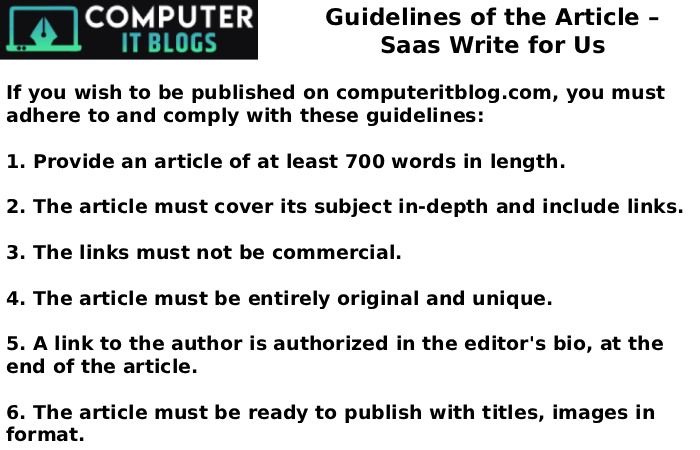
We can’t wait to hear from you! Send your writer’s pitch, a short bio, and a writing sample to contact@computeritblog.com